
 All case studies
Inventory, POS and e-commerce, one stock pool
KhanSaab is a direct-to-consumer thobe and Islamic-menswear brand doing 100+ orders a day on spreadsheets, verbal stock counts and WhatsApp ordering. We built its operating platform: an inventory and warehouse management system with an integrated GST point-of-sale, and a self-serve online store on top, sharing one product master, one stock pool and one customer identity.

- Client
- KhanSaab Store
- Industry
- Consumer & D2C · Fashion retail
- Services
- Web app, E-commerce, POS, Cloud
- Timeline
- IMS + POS live; storefront in build, 2026
- Platform
- Web · IMS · POS · Storefront
- Team
- Design + engineering · 2026

What the client measured.
Stock drifted, channels didn't talk, and nobody knew what a thobe cost to make.
At 100+ orders a day, manual inventory had stopped working. Stock counts drifted and items were oversold, then refunded and apologised for. A shirt sold at the counter stayed 'available' online until someone remembered to update a sheet. Fabric arrived in rolls of varying length at varying prices, so no one could say what a finished garment cost, or earned. The same person buying in-store and online was two records, so measurements and history were invisible. Returns went back on the shelf without inspection.
KhanSaab needed a single source of truth for products, stock and customers across the shop counter, the warehouse and the web, built so the online store, and later wholesale, could plug into it without rework.

How we got there.
IMS + POS live; storefront in build, 2026, design + engineering: here is how the time was spent.
Model the business first
BRDs, PRDs and a normalised database design for inventory and e-commerce before any screens: a product that isn't sellable, a variant that is, stock per variant per location in four buckets, and an append-only ledger for every change.
Build the IMS + POS core
Catalogue, multi-location stock, FIFO cost layers, GRN, transfers, counts, procurement, returns grading, GST POS and role-based access: one NestJS API on Supabase Postgres, with a React web app for staff.
Make overselling impossible
Online checkout reserves stock for 30 minutes with row-level locking and a database check constraint; two concurrent checkouts for the last unit can only ever produce one sale.
Put the store on top
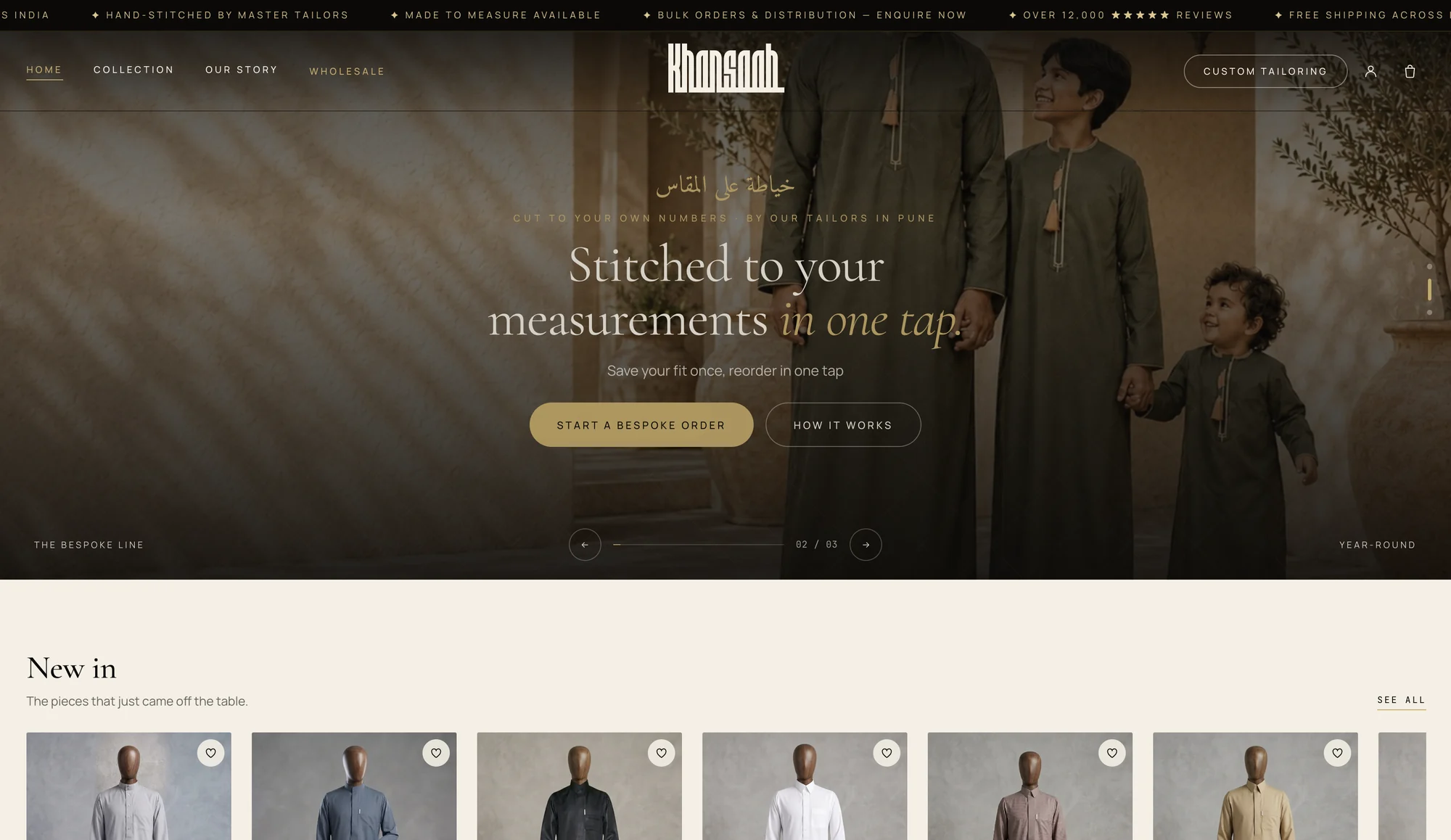
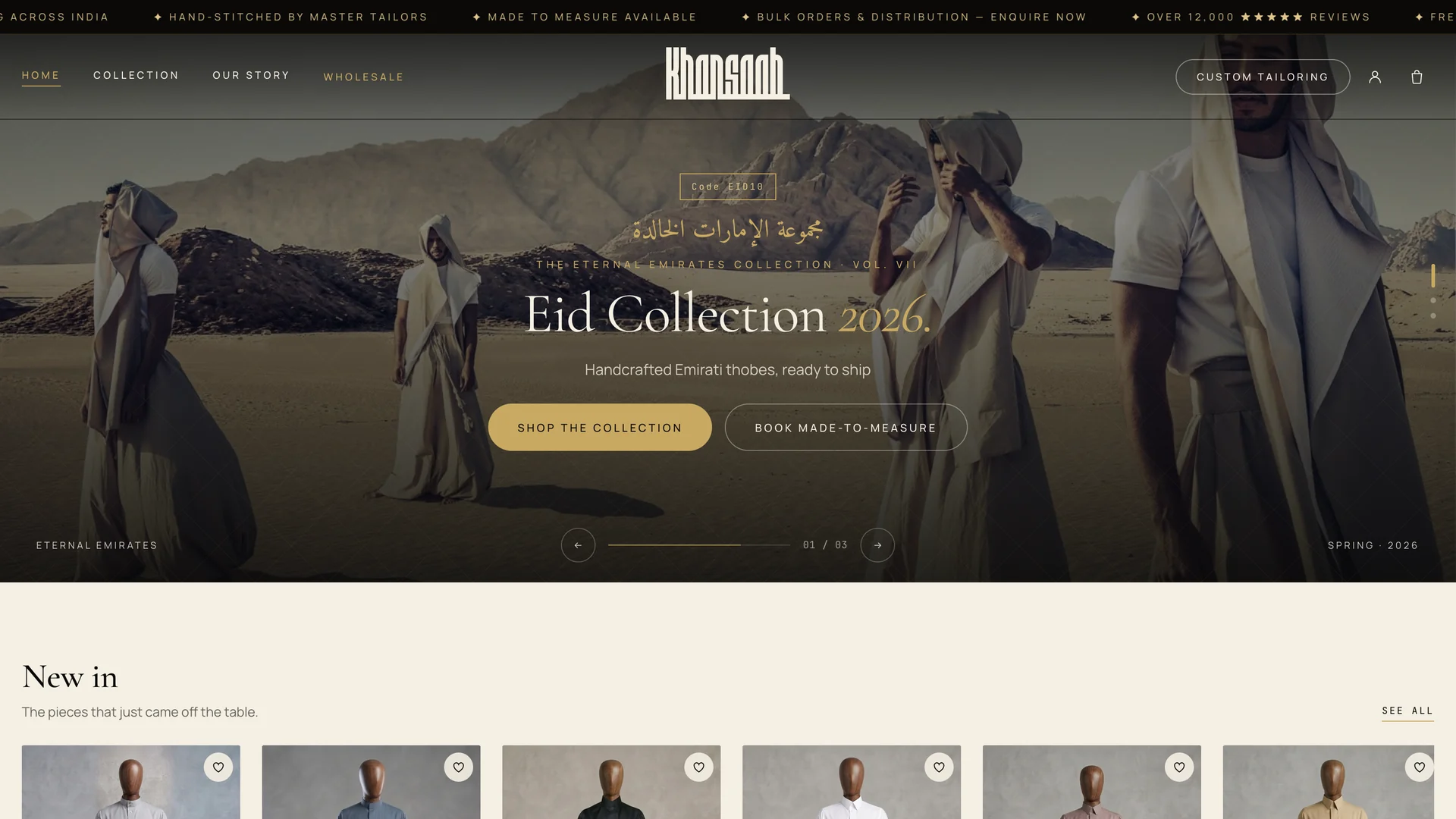
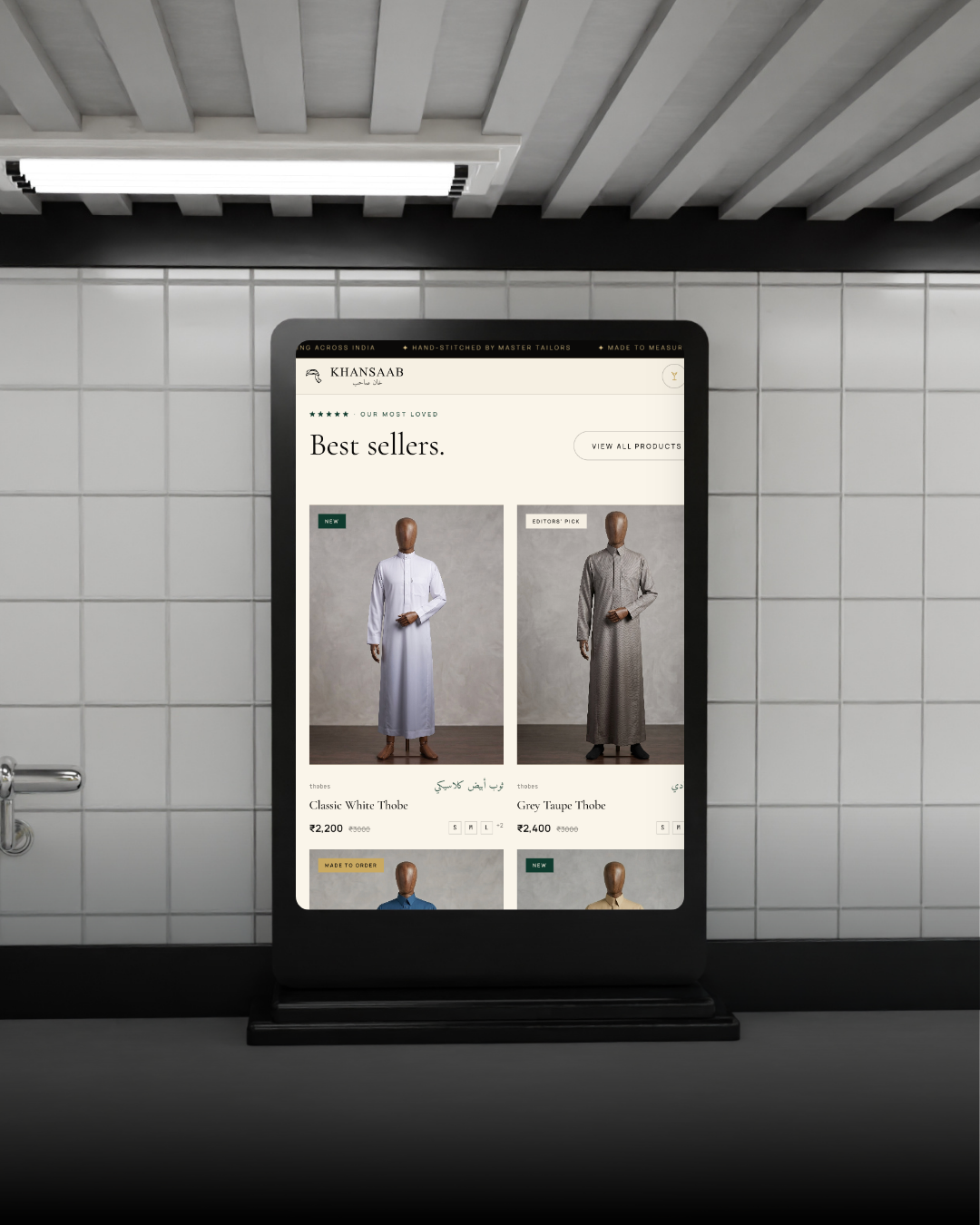
A Next.js storefront that reads the IMS catalogue, stock and customers directly: phone-OTP accounts shared with the counter, ready and made-to-order garments in one order, split shipments, and coupons that work in both channels.
Two systems, one database, one product and one customer.
The IMS owns products, stock and customers; the storefront points at them and never keeps a copy, so there is no sync delay and no reconciliation to design. Staff run the counter, stockroom, procurement and returns from one web app. Customers browse live stock, sign in with a phone OTP that recognises them from the counter, and buy ready and custom garments together: ready items ship first, custom ones follow after production.
Inventory & warehouse
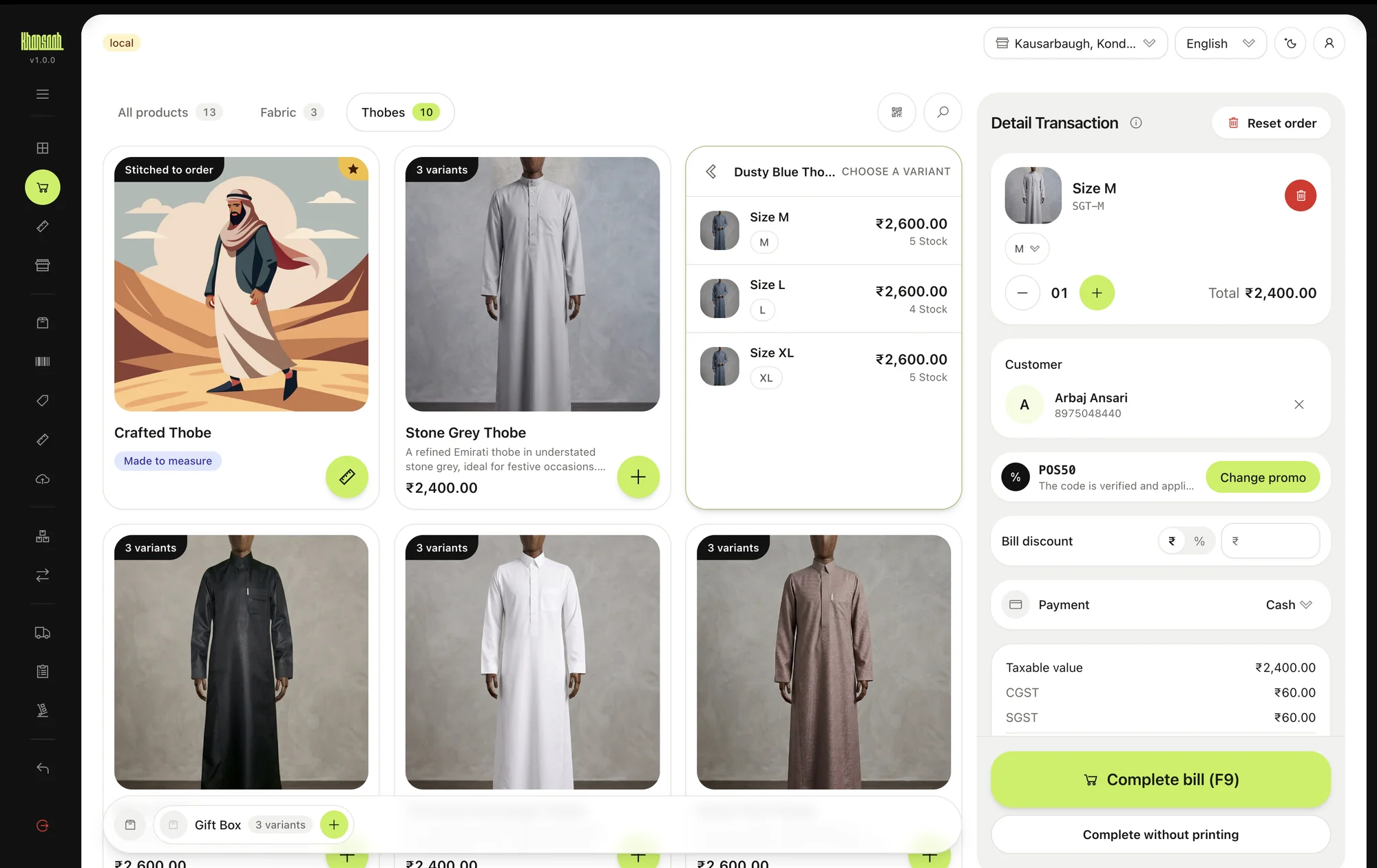
Stock per variant per location in four buckets (available, reserved, damaged, returned-pending), two-step transfers with in-transit visibility, scheduled counts with an approval gate, and an immutable ledger that always reconciles.
GST point-of-sale
Counter billing against the shared pool: customer by phone, CGST/SGST or IGST per line, bill-level discounts, parked bills, sequential invoice series per registration, day summary and void, with coupons sharing one budget with the website.
Procurement & costing
Suppliers, purchase orders with an approval threshold, goods receipts per lot (each fabric roll's real length and cost), FIFO cost layers, valuation and margin reporting, and a buying list computed live from reorder points.
E-commerce storefront
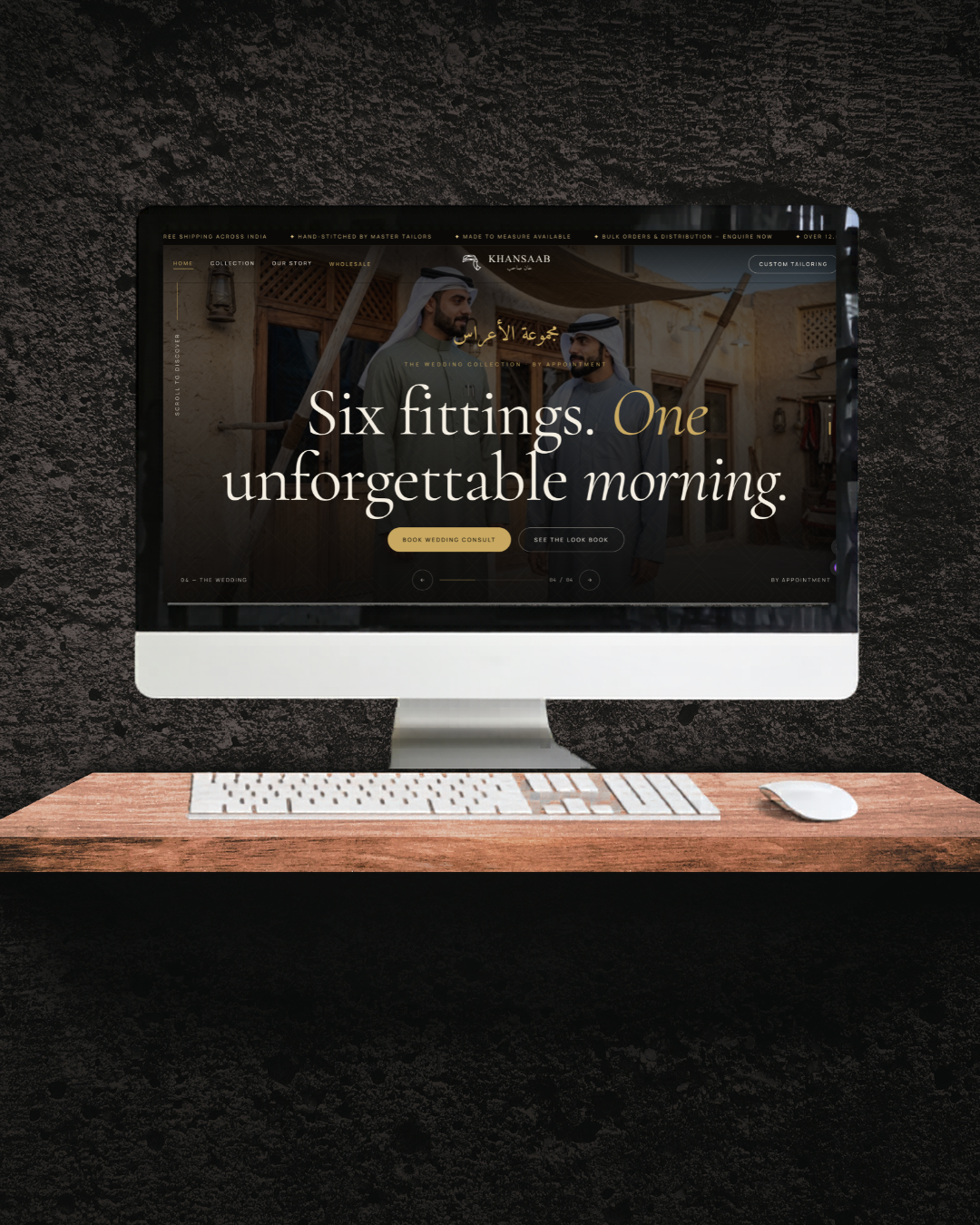
Live stock, guest carts that merge on login, made-to-order flows with saved measurements and promised dates, Shiprocket prepaid and COD, per-shipment tracking, graded returns, verified reviews and WhatsApp/email notifications.
Inside the product.
The stack behind it.
“The Pronttera team successfully transformed our vision into a modern e-commerce platform that reflects our brand and improves how customers interact with our products. Their attention to design, usability, and performance helped us build a stronger online presence and create a seamless shopping experience for our audience.”

Building something like KhanSaab Store?
Tell us the problem. We'll come back within one business day with how we'd approach it.
Take the
brighter path.
Tell us what you’re building. We’ll be in touch within one business day.